

In 2026, Core Web Vitals remain the foundation of technical SEO — but their scope and sophistication have expanded dramatically. What began as a set of speed and stability metrics is now a fully integrated experience system influencing how Google perceives quality, relevance, and satisfaction.
With INP (Interaction to Next Paint) fully replacing FID and AI-based ranking systems analyzing UX data at scale, the new Core Web Vitals framework defines not just how fast your site loads, but how it feels to use.
This blueprint explores everything you need to know to master Core Web Vitals in 2026 — from updated metrics to measurement, optimization, and future-facing performance strategies.
Why Core Web Vitals Still Define the SEO Game in 2026
More than five years after their introduction, Core Web Vitals are no longer optional. They form a central part of how Google interprets page experience and can influence rankings.
In 2026, the principle has evolved: performance is perception. Google’s algorithms increasingly consider page experience signals such as Core Web Vitals alongside broader behavioral data to better approximate overall user satisfaction.
- SEO has shifted from a purely ‘mobile-first’ mindset to an experience-first approach, where Google’s page experience signals and Core Web Vitals strongly influence how pages are evaluated.
- Core Web Vitals now influence both page-level and site-level rankings.
- FID is gone; INP is now the standard for measuring real responsiveness.
- AI ranking systems use aggregated CWV data to predict satisfaction outcomes.
The message is clear: websites that feel fast, stable, and interactive will always outperform those that simply load fast on paper.
The Current Core Web Vitals Framework: INP, LCP, CLS
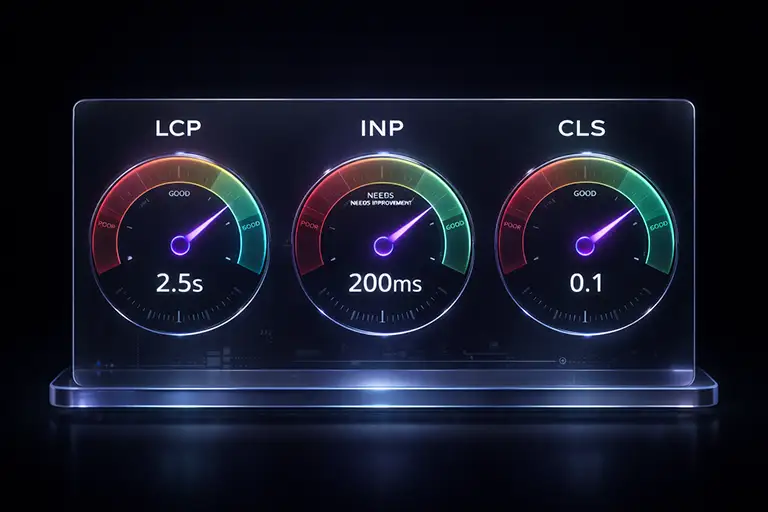
The Core Web Vitals ecosystem has stabilized around three key metrics, but each has gained nuance through updated scoring thresholds and field measurement accuracy.
- LCP (Largest Contentful Paint): How quickly main content becomes visible. Target ≤ 2.5 seconds.
- INP (Interaction to Next Paint): Tracks responsiveness across all interactions, not just the first. Target ≤ 200ms.
- CLS (Cumulative Layout Shift): Measures visual stability. Target ≤ 0.1 for a smooth experience.
Google’s refinements mean these metrics are more accurate and context-sensitive than ever — particularly on mobile devices and under fluctuating network conditions.
Measuring and Auditing Core Web Vitals in 2026
The key to improving Core Web Vitals lies in precision measurement. In 2026, new tools have made it easier to monitor real-user experience data and track progress across time.
Recommended tools:
- Chrome User Experience Report (CrUX): Real-world telemetry across browsers and regions.
- PageSpeed Insights: Combines lab and field data into actionable recommendations.
- Search Console CWV Report: Helps webmasters track sitewide improvements.
- WebPageTest + Lighthouse 13: Continuously updated to reflect INP and modern JavaScript frameworks.
Google’s systems now rely more heavily on field data — meaning performance must hold up for actual users, not just under ideal testing conditions. Developers need to test across devices, network speeds, and UX states.
Engineering for Speed: 2026 Optimization Strategies
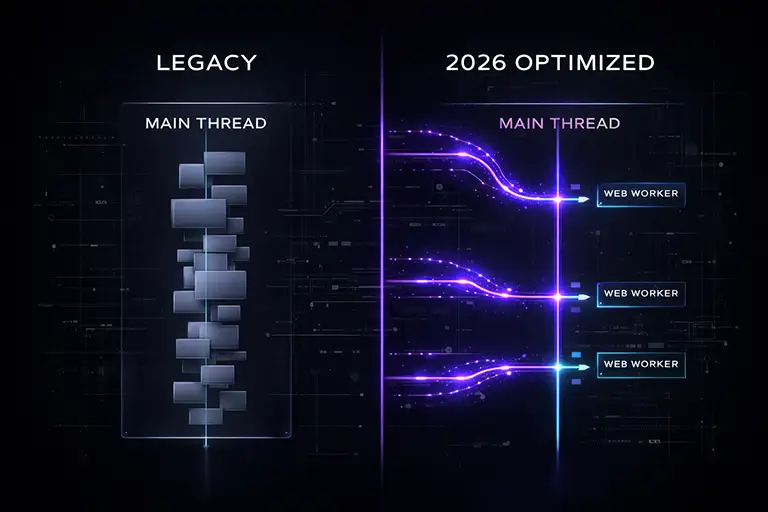
The path to superior Core Web Vitals performance is deeply technical. Every millisecond counts — and each layer of your stack plays a role.
Key strategies for 2026 include:
- Edge Rendering: Deploy via CDN edge networks to minimize latency.
- Code Splitting & Tree Shaking: Serve minimal JavaScript on initial load.
- Preload and Preconnect: Prioritize hero assets and third-party resources.
- Adopt HTTP/3 and QUIC: Faster handshakes for content-heavy sites.
- Native Lazy Loading & Content Visibility: Native browser APIs now manage smarter resource deferral.
- Reduce Main Thread Work: Offload heavy scripts to Web Workers.
A well-optimized site isn’t just fast — it’s consistent. Stability under variable traffic conditions is now a ranking differentiator.
Use an AI Web Performance Optimizer persona to generate targeted optimization plans for your stack.
Design Meets Performance: UX Stability in Modern Layouts
Great UX design supports Core Web Vitals by default. In 2026, designers and developers collaborate around performance-first design systems.
Here’s what that looks like in practice:
- Use fluid spacing and fixed aspect ratios to prevent layout jumps.
- Define explicit dimensions for images, videos, and ad slots.
- Replace motion-heavy transitions with GPU-accelerated animations.
- Serve images via next-gen formats (AVIF, WebP) for compression without quality loss.
- Design with perceived speed in mind — clear visual hierarchy and predictable motion.
The result: an interface that feels instant, even before full content render.
Case Study: SaaS Platform Boosts Core Web Vitals by 40%
In late 2025, a SaaS analytics company experienced sluggish performance — LCP averaging 4.3s and poor INP responsiveness in their React dashboard.
Over a 6-week sprint, their team implemented targeted optimizations:
- Split large dashboard modules into asynchronously loaded components.
- Adopted edge rendering via Cloudflare Workers.
- Converted hero visuals to AVIF and compressed bundle size by 37%.
- Deferred third-party chat and analytics scripts.
Outcome:
LCP improved by 0.9s, INP dropped from 380ms to 190ms, and user engagement increased by 15%.
This case illustrates that improving Core Web Vitals doesn’t just help SEO — it directly enhances user experience and retention.
Preparing for What’s Next: Core Web Vitals 2027 and Beyond
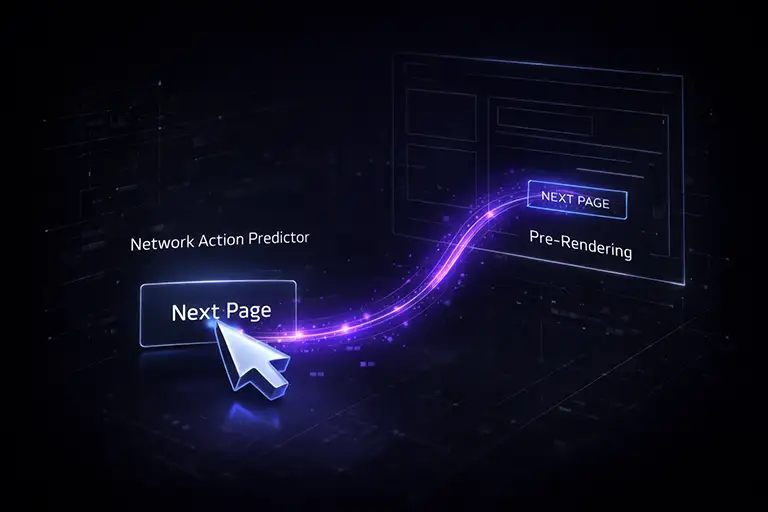
As Google’s systems integrate more AI-based evaluation, Core Web Vitals are likely to evolve toward a broader notion of “Experience Intelligence” rather than relying only on static thresholds.
Emerging developments to watch:
- Predictive Pre-Rendering: Chrome uses prediction systems, including the Network Action Predictor and prerendering features, to proactively preload pages and resources that a user is likely to navigate to next.
- Experience Scoring: A likely future direction where Core Web Vitals metrics are combined with behavioral data into more holistic UX evaluation models.
- Accessibility as Performance: Accessibility-related signals (such as ARIA consistency or assistive-technology responsiveness) could play a larger role in how quality and experience are assessed.
- AI Layout Evaluation: Neural models may increasingly be used to assess whether a page’s visual hierarchy and layout align with its stated intent and content.
These shifts reinforce one truth: Core Web Vitals are a living framework — not a fixed checklist. Continuous testing and agile collaboration between SEO, design, and development will remain essential.
FAQs: Core Web Vitals & Technical SEO in 2026
What’s new in Core Web Vitals for 2026?
INP has replaced FID, and Google’s field data precision has improved. There’s also a stronger connection between UX consistency and ranking signals.
Do Core Web Vitals still impact SEO rankings?
Yes — they’re a key part of Google’s page experience signals. Performance remains a differentiator in competitive niches.
What’s the easiest metric to improve first?
CLS. Fix image dimensions, reserve ad space, and ensure layout stability — these yield fast, visible gains.
How often should I audit my site?
Quarterly at minimum, or after major updates. Use automated alerts to catch regressions early.
Can Core Web Vitals improvements affect conversions?
Absolutely. Faster, more stable sites improve engagement, reduce bounce rates, and enhance brand perception.
Conclusion: Experience as a Ranking Currency
Core Web Vitals are no longer just technical metrics — they’re experience currency.
In 2026, Google’s algorithms reward not only fast-loading pages but those that feel immediate, stable, and human-centered.
Performance is branding. Stability is trust. Responsiveness is empathy.
Brands that internalize these principles will not only win rankings but also earn loyalty — one seamless interaction at a time.
If you need hands-on help improving Core Web Vitals and technical SEO, explore my Boise SEO services.